Rustic Camper Cabins in Maryland State Parks: Beds and Basics
A rustic cabin can sound like an easy step up from tent camping, but the name alone does not tell you what is inside. If you are trying to work out where everyone will sleep, what comforts to expect, or what to pack, the key is to treat the cabin’s own listing as the final word. Here’s how to use that listing to plan a comfortable Maryland State Park stay.
What a rustic camper cabin tells you
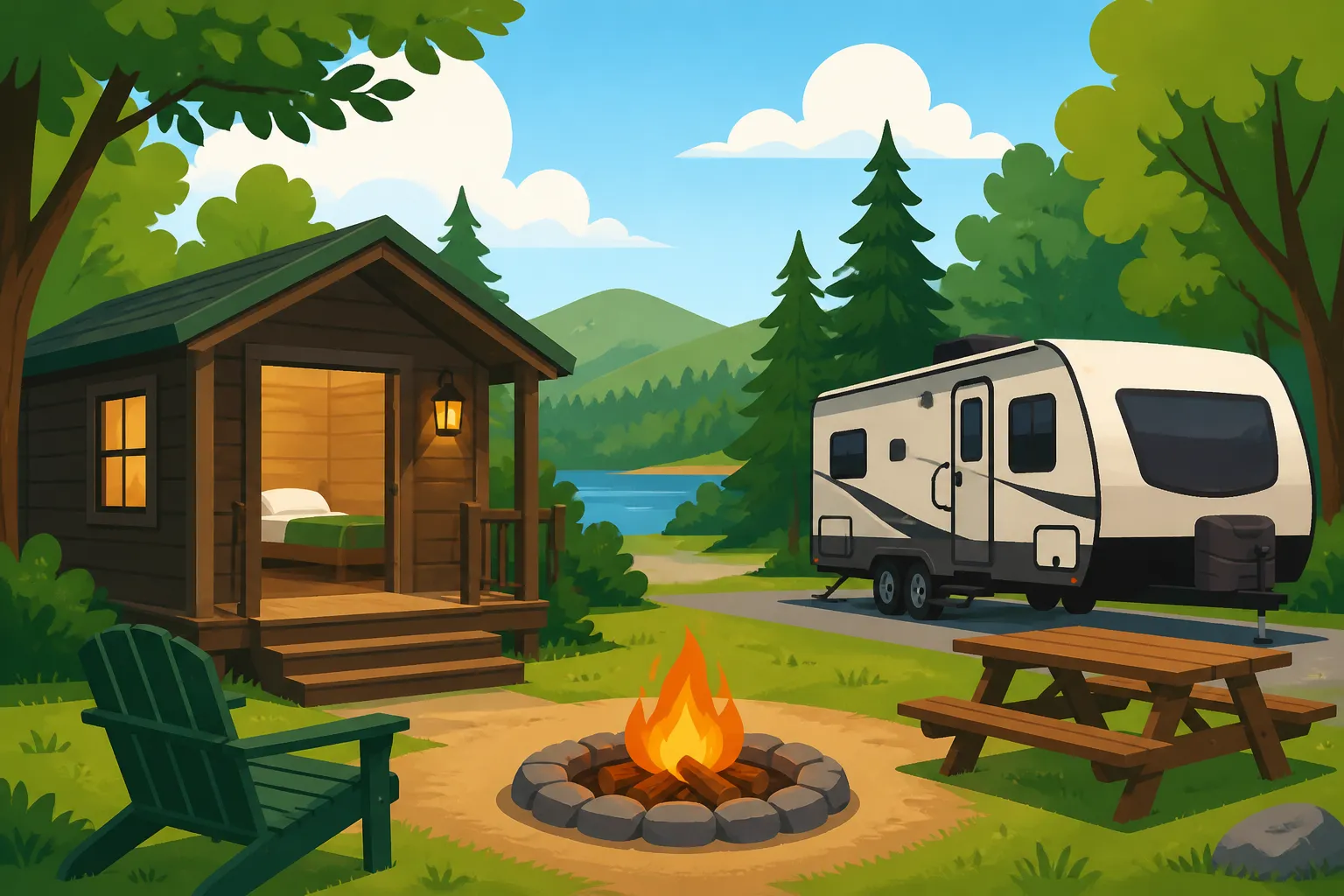
The Maryland Department of Natural Resources describes camper cabins as small rustic cabins with beds for four to six people. That gives you a useful starting point for planning the sleeping arrangement, but it does not answer every practical question about a particular cabin.
“Rustic” is not a complete inventory. The label does not, by itself, confirm whether a cabin has a kitchen, private bathroom, heat, air conditioning, electricity, cooking equipment, or other conveniences. Nor should you assume every camper cabin has the same setup. Features can vary by location, so read the listing for the specific cabin you are considering.
A cabin may make sense if you want a roof and beds without bringing a tent, or if someone in your group would rather not sleep on the ground. It is not automatically a substitute for a full-service cabin. If you are comparing cabin styles, Full-Service Cabins in Maryland State Parks: What Sets Them Apart and What Comes Inside a Maryland State Park Cabin, Kitchen to Shower can help you identify which details deserve a closer look.
Think of the cabin as a place to sleep and a base for your trip until its listing confirms more. That approach avoids a common mismatch: reserving based on the word “cabin,” then discovering that an expected feature was never included.
Start with the sleeping plan
Beds simplify some parts of camping, but you still need to understand the sleeping arrangement before you decide the cabin suits your group. The listing may describe bed types, layout, or occupancy details. If it does not answer a question that matters, ask the park directly rather than filling in the gaps from another cabin’s description.
Match the group to the actual beds
Begin by listing who will sleep in the cabin and what each person needs to sleep comfortably. A group’s head count is only part of the decision. Consider whether anyone needs a particular kind of sleeping surface, extra room to move around, or a quieter place to rest. The cabin’s advertised sleeping capacity does not necessarily mean every group will find the layout equally comfortable.
Do not assume that a bed is supplied with linens, pillows, blankets, or towels. Check the individual listing for what is provided, and ask the park if the wording is unclear. If you need to bring bedding, plan for the bed sizes and arrangement shown in the cabin details rather than packing based on an assumption.
If your party includes children, older adults, or someone who has trouble climbing or moving through tight spaces, look beyond the maximum capacity. Ask about the layout, access to the sleeping area, and any features that affect mobility. Planning an Accessible Stay or Outing in Maryland State Parks offers more questions to consider when access needs are part of the trip.
Decide whether the cabin is enough for your group
A cabin that fits the group on paper may still feel cramped if everyone plans to spend a lot of time indoors, bring bulky gear, or prepare meals inside. Think through where people will sit, store bags, change clothes, and keep anything they need overnight. The listing may not describe usable floor space or storage, so contact the park if those details would affect your decision.
Also consider how the sleeping plan works if someone wakes early or goes to bed late. A shared room can be convenient for a family or small group, but it may offer less privacy than separate sleeping spaces. If privacy matters, do not assume that the beds are in separate rooms unless the listing says so.
For a broader comparison of options, Camping in Maryland State Parks: Campsites, Cabins and Mini Cabins can help you think through whether a cabin, tent site, or another accommodation best fits your group.
Check the amenities instead of guessing
The most useful cabin listing is the one that answers the questions that affect your trip. Read the property description, amenities, rules, and any notes tied to the specific cabin. A general page about cabins can explain the category, but the individual property details are what you need to plan around.
| Question to check | Why it matters | What to do if the listing is unclear |
|---|---|---|
| What bedding is provided? | It determines whether you need sheets, blankets, pillows, or sleeping bags. | Ask the park what is supplied and what guests must bring. |
| Is there electricity? | It affects lighting, charging, and any electrical equipment you plan to use. | Confirm the cabin’s specific setup rather than relying on another property’s description. |
| Is there heat or cooling? | It changes how you prepare for the expected conditions. | Ask what equipment is present and whether it is available during your stay. |
| Where are the bathroom and shower facilities? | The location and type of facilities can affect comfort and access. | Check the listing and ask about the facilities guests may use. |
| Can you prepare or store food in the cabin? | Cooking and food storage plans depend on what the space provides. | Confirm whether appliances, utensils, or storage are included. |
| What furniture and storage are available? | Bags and gear can take up more space than expected. | Ask for details if the room layout is not described. |
| What are the cabin’s rules? | Rules may affect pets, cooking, visitors, and how you use the space. | Read the current property information and ask the park about anything uncertain. |
Treat each amenity as a separate question. For example, a listing that mentions a bathroom does not automatically tell you whether it is private, whether it includes a shower, or what supplies are provided. Likewise, a mention of a kitchen area does not confirm which appliances or cookware are available.
If a feature is important, get a clear answer before booking. This is especially useful when someone in your group relies on a particular facility, when you need to charge medical or mobility equipment, or when you are planning meals around a specific appliance. If you cannot confirm a feature, make a backup plan that does not depend on it.
You can compare cabin options with Comparing Amenities Across Maryland State Parks Before You Choose. For visitors weighing a cabin against a yurt, What’s Inside a Maryland State Park Yurt, From Bed to Bathroom? explains why checking the details of each accommodation matters.
Plan food, bathrooms, and daily routines
A comfortable stay depends on more than where people sleep. Work out how your group will eat, wash up, use the bathroom, and keep belongings organized. The cabin description may answer some of these questions, but the rest need to be checked with the park or planned around the facilities that are confirmed.
Make a meal plan that fits the cabin
Do not build your menu around a stove, refrigerator, microwave, dishes, or cookware unless the listing confirms those items. If food preparation facilities are limited or unclear, plan meals that can be handled with the equipment you know will be available. Ask whether cooking is allowed in the cabin and where any permitted cooking must take place.
Food storage needs the same attention. Confirm what storage is provided and whether the park has instructions for keeping food secure. Do not assume that a cupboard, cooler, or refrigerator is included. If you will bring a cooler or other equipment, check the cabin’s space and rules before packing it.
For meal planning ideas, Cooking in a Maryland State Park Cabin Kitchen: What to Bring may help you make a packing list, but use the camper cabin’s own information to decide what applies to your stay.
Find out how bathroom access works
A cabin reservation does not tell you, by itself, what bathroom facilities are available or where they are located. Check whether the listing describes facilities inside the cabin or elsewhere, and confirm access arrangements if distance, stairs, or nighttime trips are a concern. If shower access matters, verify that detail separately rather than treating “bathroom” as an answer to every question.
Bring personal toiletries and towels unless the property information says they are supplied. If you are traveling with someone who needs a particular bathing or bathroom setup, ask specific questions before choosing a cabin. A general description may not include the details needed to judge whether the accommodation will work.
For campground facility planning, Showers and Restrooms at Maryland State Park Campgrounds offers related questions to ask when you are staying in a park setting.
Keep shared space manageable
A small cabin can feel easier to use when each person has a simple place for bags, clothes, and personal items. Pack only what you need, and keep walking areas clear. If the listing does not describe storage, plan as if floor space may be limited and avoid bringing bulky items without checking first.
Set expectations with your group about quiet, lights, and shared routines. A cabin can bring everyone under one roof, which is convenient, but it also means that one person’s late-night unpacking or early departure may affect others. Agreeing on a basic plan before arrival can make the shared space more comfortable.
Pack for the cabin you have, not the one you imagine
A good packing list begins with the confirmed amenities. Make a short checklist from the listing, then add items that are not provided or that your group needs regardless of the cabin’s setup. This is more reliable than packing for a generic cabin description.
Start with sleep and comfort
Confirm whether you need to bring bedding, pillows, or sleeping bags. Pack sleepwear suited to the expected conditions, and bring an extra layer if temperatures may change. If the cabin’s heating or cooling is not described, do not count on a particular indoor temperature; ask the park what to expect and plan flexible clothing.
Consider a small night light or flashlight if you do not know how the cabin is lit. Bring chargers only after confirming that power is available and suitable for your needs. If a device is essential, ask about electrical access and make a backup plan rather than assuming the cabin can support it.
Packing for a Camper Cabin Night in a Maryland State Park is a useful companion for building a cabin-specific checklist. Adapt it to the listing instead of treating any general list as a promise about what the cabin contains.
Bring the basics that are easy to overlook
Depending on what the listing confirms, you may need towels, toiletries, dish supplies, food-storage containers, cleaning items, or drinking water. Do not assume these are supplied. Ask the park what guests are expected to bring and whether there are any restrictions on equipment or supplies.
Keep essentials together so they are easy to find after arrival. A small bag for bathroom items, a separate bag for bedding, and a clear place for medications can help prevent an unpacking scramble. If someone in the group has a medical, dietary, or accessibility need, include the supplies they rely on and confirm that the cabin’s features support their use.
Outdoor clothing and footwear still matter. A cabin provides shelter for sleeping, not a guarantee that the surrounding paths, campground, or facilities will be dry, level, or close by. Check the location information and forecast, then pack clothing suited to the activities you plan.
Avoid packing around unconfirmed equipment
It is tempting to assume that a cabin includes the same items as a rental you have used elsewhere. Resist that shortcut. A familiar amenity at one property does not establish that it is available at another. If you are planning to bring equipment such as a portable cooking device, space heater, fan, or grill, check the rules first. Do not bring or use gear in a way the property listing does not allow.
A simple “confirmed, not confirmed, ask” list helps:
- Put an item under confirmed only if the listing or park has clearly said it is provided.
- Put it under not confirmed if the description does not mention it.
- Ask the park about anything that could change your decision or safety plan.
- Pack a suitable alternative when you cannot get a clear answer.
That habit is especially helpful for bedding, cooking, power, bathroom access, and temperature control. Those are the details most likely to affect comfort and the amount of gear you need.
Choose the right accommodation and understand the booking
Camper cabins are one kind of overnight option, not a universal solution for every trip. Compare the cabin with a tent campsite, mini cabin, yurt, or full-service cabin based on what your group needs and what the specific property provides. Keep the comparison practical: sleeping surface, indoor space, food preparation, bathroom access, power, and the work involved in bringing gear.
A tent site may suit people who already have camping equipment and want to sleep outdoors. A more furnished accommodation may fit a group that needs additional features, but the name alone is not enough to confirm those features. Review the individual listing for any option you consider. For a first overnight trip, First-Time Campers in Maryland State Parks: Choosing Where to Go can help organize the decision around your group’s comfort and experience.
Read the reservation details carefully
Before completing a reservation, confirm that the selected accommodation is a camper cabin and that the listing describes the same property you intend to use. Check the dates, occupancy information, amenities, and rules displayed for that cabin. Review the reservation confirmation afterward and keep the details available for arrival.
Do not assume that booking a cabin includes access to every park facility or resolves separate questions about arrival, parking, or park entry. Check the current information for the park and the reservation. If an instruction is missing or unclear, ask the park or consult the official reservation system rather than relying on an old description or another visitor’s account.
For a wider view of how overnight reservations work, see How the Maryland State Park Booking System Works for Campers. If the trip also includes a day visit, Day-Use Reservations vs Overnight Camping at Maryland State Parks can help you identify questions to settle separately.
Check trip conditions before leaving
Before departure, review the park’s current status information and any notices that could affect your stay. Conditions, access, or facility availability may change. Check again near arrival if the park provides updates, and have a backup plan if the accommodation or a key facility is unavailable.
Fire restrictions can change, so check the relevant official information before leaving and again when you arrive. Do not rely on a past visit or an old online discussion to decide whether a particular fire or cooking activity is allowed. Confirm the rules for the specific property and the equipment you plan to use.
If you are bringing a pet, do not assume the cabin accepts pets because other accommodations at the park do. Confirm the pet policy for the specific cabin and review Pets in Maryland State Parks: Leashes, Vaccines and Off-Limits Spots for related planning questions.
Frequently Asked Questions
Are rustic camper cabins furnished?
The confirmed general detail is that camper cabins are small and have beds. That does not establish which other furnishings or supplies are included at a specific location. Check the property listing for the cabin you are considering, and ask the park about anything important that is not described.
Should I bring my own bedding?
Check the listing rather than assuming bedding is supplied. If the description does not say whether sheets, blankets, pillows, or towels are provided, ask the park and pack what you need based on its answer.
Do all camper cabins have kitchens or bathrooms?
The general description does not confirm a kitchen or bathroom in every cabin. Facilities and amenities need to be checked for the individual property. Verify the location and type of any bathroom, shower, or cooking facilities that matter to your group.
Is a camper cabin the same as a full-service cabin?
No assumption is safe based only on the word “cabin.” Compare the specific amenities in each listing. A full-service cabin may be a better match if your group needs features that the camper cabin listing does not confirm.
What should I check before reserving?
Confirm the sleeping arrangement, included supplies, power and temperature features, bathroom access, cooking and food-storage options, occupancy information, and rules. Check the reservation details and current park information, then contact the park about any unanswered question that could affect your stay.
Sources
- Maryland Department of Natural Resources — Camping & Cabins (checked November 23, 2026)
Disclaimer
This article is for general informational purposes only and does not constitute professional advice. Laws, prices and regulations vary by location and change over time. Consult a qualified professional for guidance on your specific situation. Maryland Camping & RV is not a government agency and is not affiliated with any government agency.